
Private Label
Empty Perfume Bottles Wholesale: The Refillable Economy Reshaping Fragrance in 2026
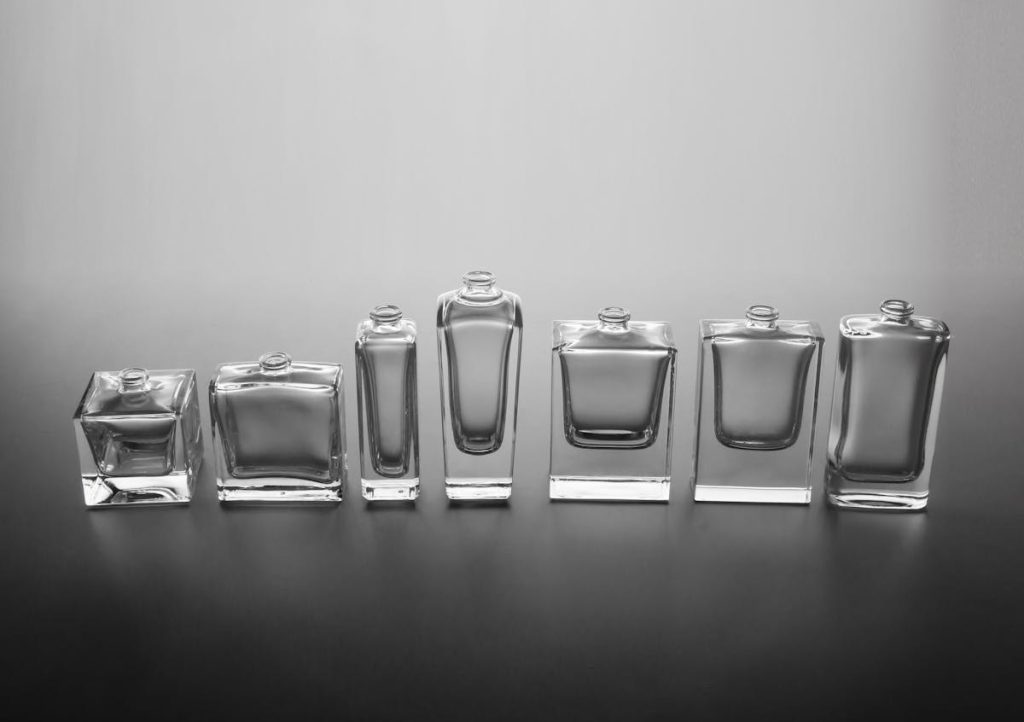
Until 2022, empty perfume bottles wholesale meant one thing: cheap empty containers for hobbyists making homemade fragrance. By 2026, the category has transformed. Major brands (Mugler, Yves Saint Laurent, Le Labo, Diptyque) all operate refill programs offering empty bottle purchases. Consumer demand for refillable formats grew 67% in 2024, driven by sustainability pressure and the post-pandemic reuse mindset. The empty perfume bottles wholesale market is now a $340M segment with sophisticated buyers — and entirely different supplier economics from filled-bottle wholesale. This guide is the complete refillable economy landscape: the four refill mechanisms, the sustainability math that withstands scrutiny, the brand launch math for refillable-positioned brands, and the operational decisions that make refillable programs profitable rather than performative.
💼 Get pricing in 24h via WhatsApp
WhatsApp us at +33617747713 with your refillable program concept and volume target. We respond within 24h with multi-tier pricing.
👉 Get refillable program quote
The Reuse Psychology Driving Consumer Demand
Consumers buy empty bottles for refill purposes for three reasons:
- Sustainability — refilling a bottle saves 7g of glass and packaging waste per refill cycle. Across 4 refills, that’s 28g of waste avoided per consumer per year.
- Cost savings — branded refill perfume costs 25-40% less than buying a new full bottle. A €120 50ml flagship + €68 refill = €188 over two cycles, vs €240 for two new flagship bottles.
- Travel atomizer culture — the 5ml-15ml refillable atomizer for travel use is now a common gift category. Mugler’s 7.5ml refillable Aura travel atomizer sold 200,000+ units in 2024 alone.
The combination of these three drivers creates a compounding effect: brands that offer refillable programs see customer lifetime value increase 30-45% vs equivalent non-refillable brands. The refill purchase is itself a customer touchpoint that brands can leverage for retention marketing.
The 4 Refill Mechanism Types
The empty-bottle wholesale market splits primarily by refill mechanism:
1. Crimp pump (most common)
Atomizer pump is permanently crimped to the bottle. To refill, the consumer uses a needle-injection refill bottle (Le Labo’s system). Wholesale unit cost €0.85-€1.80. Best for: established brands building refill program around existing flagship.
2. Screw cap with detachable atomizer
Atomizer unscrews, consumer pours liquid in. Wholesale €0.95-€2.10. Common for niche brands. The simplest refill mechanism — works without specialized refill bottles but requires more careful handling to avoid spills.
3. Magnetic atomizer (newest, Mugler-style)
Atomizer pulls off magnetically for refill. Wholesale €2.50-€4.50. Premium positioning. The most consumer-friendly refill experience — feels engineered, sounds satisfying when reseating. Drives the highest perceived premium of all refill mechanisms.
4. Travel atomizer with side-fill
The 7.5-15ml format with fill port on the side. Wholesale €1.50-€3.20. The fastest-growing sub-format. Consumers fill from their full-size bottle, carry the travel atomizer, refill at home from the same source bottle. The genius of this format: brands sell both the source bottle AND the travel atomizer, creating two purchase moments.
| Mechanism | Wholesale Cost | User Experience | Best For |
|---|---|---|---|
| Crimp pump | €0.85-€1.80 | Requires refill bottle injection | Established refill programs |
| Screw cap detachable | €0.95-€2.10 | Simple but spill-prone | Niche brands |
| Magnetic atomizer | €2.50-€4.50 | Premium feel, satisfying click | Luxury positioning |
| Travel side-fill | €1.50-€3.20 | Easy fill from full bottle | Travel SKU + brand extension |
The 3 Buyer Profiles in the Refill Market
The refillable empty-bottle market splits into three buyer profiles distinct from the casual-empty-bottle market:
- Refill program brands — major fragrance houses operating refill stations in retail. Buy 50,000+ empty bottles per quarter, prioritize bottle-cap interchangeability with their flagship product, accept higher unit cost (€2-€5 per bottle) for visual identicality.
- Refillable-positioned indie brands — emerging niche brands building “buy once, refill forever” as their core differentiator. MOQ 1,000-5,000, prioritize unique mechanical design, willing to pay €1.50-€3 per bottle for branded experience.
- Travel atomizer specialists — focused exclusively on the 5-15ml refillable travel format. Sell to retailers, hotel amenity programs, gifting markets. MOQ 2,000-10,000.
💼 Need help choosing the right refill mechanism?
WhatsApp us at +33617747713 with your brand positioning and volume target. We respond within 24h with mechanism recommendation.
Sustainability Math That Withstands Scrutiny
Refillable claims are increasingly audited. Real sustainability metrics:
- One refill cycle saves: 22g glass + 4g cardboard + 1g plastic packaging = ~27g of packaging waste
- Carbon footprint reduction: 0.18kg CO2-equivalent per refill (vs new bottle production)
- Break-even refill threshold: 3 refills before sustainability advantage compounds (first refill carries the production cost of the refill bottle itself)
- Honest claim language: “Refill 4× saves the equivalent of one new bottle’s lifecycle” — defensible, not greenwashing
Brands making vague “refill = sustainable” claims face increasing regulatory scrutiny. France’s anti-greenwashing law (effective 2024) and EU Green Claims Directive (2025+) require quantified sustainability claims. The math above provides defensible language for marketing.
How to Engineer a Refillable-Bottle Line
Refillable positioning differentiates new brands in saturated retail. Three engineering requirements:
- Standardize bottle and refill cap — the refill bottle must mate exactly to the flagship bottle. Engineering tolerance: ±0.1mm on neck dimensions.
- Refill-cap material match — if your flagship has brass cap, the refill bottle must have brass cap. Material mismatches kill brand consistency.
- Refill mechanism robustness — 50+ refill cycles without degradation. Test in lab before launch.
The Refill Marketing Flywheel
Refillable programs unlock a unique marketing dynamic: the refill itself becomes a customer touchpoint. Brands that exploit this build retention >85%:
- Email sequences triggered by refill purchase — content about scent layering, fragrance education, brand storytelling
- Loyalty rewards for multiple refills — “5th refill free,” “Bring your bottle for 30% off”
- Refill-station retail experiences — partner with a fragrance boutique to host an in-store refill bar; drives foot traffic and content
- Subscription refill programs — auto-shipped refills every 90 days for committed customers, providing predictable revenue
Pricing the Refillable Line
Standard pricing structure for a refillable brand:
- Flagship 50ml bottle: $120 retail (signals investment)
- 100ml refill in lighter packaging: $68 retail (43% lower per-ml cost)
- Travel 7.5ml refillable atomizer: $35 retail (gift-tier accessory)
This pricing creates a “consumer feels smart about refilling” framing. Pricing the refill above 60% of the flagship per-ml cost destroys the value proposition.
Capital Required to Launch Refillable
Pack 1,000 50ml flagship bottles + Pack 1,000 100ml refill bottles + €15,000 retail partner program = €4,200 + €4,800 + €15,000 = €24,000 launch capital for a refillable brand. Add €8,000 for refill-station fixtures if hosting in retail.
The Refillable Brand Examples
Examining successful refillable launches reveals patterns:
- Mugler Alien — refillable since 2007. Built the model. Annual refill bottle volume: 3.2M units globally.
- Yves Saint Laurent Libre — added refill program 2021. Rapid adoption of magnetic mechanism.
- Le Labo — branded refills shipped in lighter packaging. Customer relationship built around refills.
- Diptyque — refill program for select fragrances. Premium positioning maintained.
- Maison Francis Kurkdjian Aqua Universalis — refillable launched 2023. Travel-luxury positioning.
The pattern: refillable programs work best for fragrances customers wear daily. For special-occasion fragrance bought once and worn rarely, refill economics don’t compound.
How to Order Refillable Bottles: 8-Step Process
- Choose refill mechanism based on brand positioning and target retail tier.
- Specify dimensional tolerance ±0.1mm on neck and refill connection point.
- Match cap material across flagship + refill bottles for brand consistency.
- Test refill cycle robustness — minimum 50 cycles without degradation.
- Sample order ($40-$120 per sample with full mechanism).
- Negotiate combined pricing — bundling flagship + refill orders unlocks 10-15% savings.
- Pay deposit, production starts.
- Pre-shipment QC — refill bottles need especially careful inspection (cap fit critical).
6 Common Mistakes With Refillable Programs
- Mistake 1 — Refill priced too close to flagship. If refill costs 80%+ of new bottle, value proposition collapses. Target 50-60% per-ml cost.
- Mistake 2 — Inconsistent cap material between flagship and refill. Brand consistency suffers; consumers notice.
- Mistake 3 — Vague greenwashing claims. “Sustainable” without quantification triggers regulatory scrutiny. Use specific metrics.
- Mistake 4 — No refill marketing flywheel. Selling refills without follow-up email programs wastes 60% of LTV potential.
- Mistake 5 — Wrong refill mechanism for retail tier. Magnetic atomizer at $40 retail = mismatch. Crimp pump at $200 retail = under-investment.
- Mistake 6 — Skipping refill cycle testing. Mechanism failure on cycle 8 destroys brand reputation. Test 50+ cycles before launch.
Frequently Asked Questions
What’s the best refill mechanism for emerging brands?
Screw cap detachable for $40-$80 retail (simple, low cost). Magnetic atomizer for $120+ retail (premium experience justifies cost). Travel side-fill for brands building travel SKU extension.
How do I price refill bottles?
Target 50-60% of flagship per-ml cost. Example: $120 flagship 50ml = $2.40/ml. Refill 100ml at $68 = $0.68/ml = 28% of flagship cost. Strong value proposition.
Are refillable programs profitable?
Yes, when execution discipline is high. Customer LTV increases 30-45% vs non-refillable equivalents. Refill purchases also create marketing touchpoints for upsell and retention.
What MOQ for custom refillable bottles?
Stock refillable mechanisms: from Pack 1,000. Custom refillable design: from Pack 5,000+ with custom mold investment €4,500-€12,000.
Do customers actually refill their bottles?
Yes, when programs are well-designed. Refill rate among customers offered the option: 35-55% within 12 months. Higher for daily-wear fragrance, lower for special-occasion.
What’s the typical lifecycle of a refillable program?
Year 1: setup + first customer cycles. Year 2-3: refill rate stabilizes at 35-55%. Year 4+: refill revenue equals 25-40% of new-bottle revenue. Compounding economics over 5+ year horizon.
The Refill Bottle Production Cycle
Refill bottles operate on different production economics than flagship bottles:
- Lighter packaging acceptable — refill bottles ship in cardboard sleeve rather than rigid box. €0.85 packaging cost vs €2.40 for flagship box.
- Different glass weight expectation — refills can be 60-70% glass weight of flagship without consumer complaints. The flagship bottle delivered the “luxury signal”; refill is functional.
- Reduced decoration intensity — silkscreen logo only, no foil-stamping. Saves €0.45-€0.85 per bottle.
- Pump matching — refill atomizer must match flagship dimensions exactly. ±0.1mm tolerance on neck.
The Refill Subscription Model
Beyond one-time refill purchases, subscription refill programs unlock predictable revenue:
- 90-day refill subscription — auto-shipped every 3 months. Customer LTV +45-65% vs one-time refill purchasers.
- Flexible cadence — 30/60/90/120 day options. Customer chooses based on consumption rate.
- Discount for commitment — 10-15% discount for subscribing reduces churn 30%.
- Bonus content for subscribers — limited-edition refills, early access to new fragrances. Drives community building.
Refill Programs in Retail Environment
Five retail formats for refill programs:
- In-store refill station — customer brings flagship bottle, fills from bulk dispenser. Margin: 75-85%. Operational complexity: high.
- Pre-bottled refill SKU on shelf — separate refill bottle alongside flagship. Margin: 65-75%. Easiest to operationalize.
- Mail-back refill program — customer mails flagship, receives refilled bottle. Premium experience. Logistics complexity.
- Refill via DTC website — flagship customers purchase refills online for delivery. Most scalable.
- Travel atomizer fill stations — partner with airports/hotels. Niche but profitable.
Refill Mechanism Sample Verification
Refillable bottle sampling focuses on mechanism robustness — failure on cycle 8 destroys brand reputation:
- 50-cycle refill test — refill, empty, refill, empty for 50 cycles. Mechanism must function flawlessly throughout. Many “refillable” claims fail this test.
- Magnetic atomizer audio test — magnetic atomizers should reseat with satisfying click. Weak click = weak magnet, will fail over 12+ months.
- Cross-batch interchangeability — request samples from 2 different production batches. Verify they’re interchangeable. Critical for refill program logistics.
- Seal integrity after refill — refill bottle, leave inverted 24 hours. No leaks. Tests gasket and seal mechanism under realistic conditions.
Refillable Bottle QC Specifics
Refillable bottle QC focuses on mechanism durability across multiple use cycles:
- 50-cycle production testing — every production batch should be tested for refill mechanism durability. Bottle that fails on cycle 8 destroys brand reputation.
- Cross-batch interchangeability — refills from new production batches must mate to flagship bottles from older batches. Critical for refill program logistics.
- Magnetic strength consistency — for magnetic refillable atomizers, weak magnets fail at month 12-18. Verify magnetic pull force across production samples.
- Seal gasket integrity — gaskets fail across temperature cycles. Test production samples in 0°C/40°C cycles 20 times. Quality gaskets hold; cheap gaskets crack.
Refillable Bottle Supplier Long-Term Strategy
Refill program success depends on multi-year supplier consistency — your customers expect refill bottles to mate with their original flagship:
- Specification freezing — once you launch a refillable program, lock specifications with supplier. Even minor dimensional changes create cross-batch compatibility issues.
- Multi-year contracts — for refillable programs, 3-year supplier contracts with price escalators preferable to annual renegotiation. Stability worth premium pricing.
- Backup supplier with matching specs — if primary supplier has capacity constraints, backup must produce identical refill bottles. Plan this from day 1.
Where to Go Next
- Local sourcing → Empty Bottles Near Me Guide
- Pillar guide → Perfume Bottles Wholesale Pillar
- Travel format → Mini & Travel Bottles
- Format guides → 50ml, 100ml
- Sample bottles → Sample Bottle Strategy
- Brand launch → Private Label Pillar
👉 Get refillable program quote

