
Private Label
50ml Perfume Bottles Wholesale: Why 50ml Became the Strategic Flagship Size in 2026
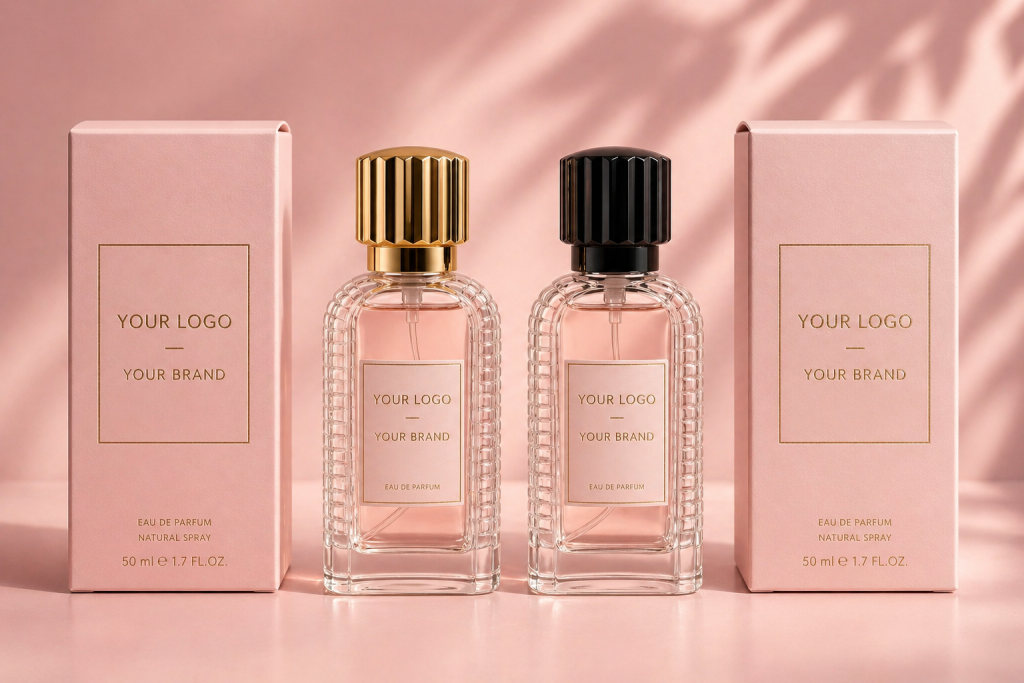
In 2024, 50ml became the single most-shipped perfume size globally — overtaking 100ml for the first time since the 1970s. This shift reflects three retail realities: TikTok creators recommend 50ml as the “right size to commit to a fragrance,” airline carry-on rules favor smaller bottles for travel-ready brands, and e-commerce shipping costs penalize 100ml’s heavier weight. If you’re choosing your launch SKU size in 2026, here is the complete strategic case for 50ml — the retail price elasticity, the unit economics, the silhouettes that work, the reorder math, and when 50ml is the wrong choice.
💼 Get pricing in 24h via WhatsApp
WhatsApp us at +33617747713 with your 50ml volume target and decoration spec. We respond within 24h with multi-tier pricing.
👉 Get a 50ml quote on WhatsApp
The Retail Price Elasticity That Makes 50ml Work
50ml hits a psychological sweet spot: large enough to feel like a “real bottle” (not a trial size), small enough to be priced under $80 retail without confusing the buyer. Compare retail price tolerance across formats:
- 30ml — buyers expect $25-$45 retail. Reads as “trial size” even when premium.
- 50ml — buyers accept $45-$120 retail. The flagship price tier where most niche luxury fragrance lives.
- 100ml — buyers expect $90-$200 retail. Premium tier but harder to justify for unknown brands.
The retail price elasticity peaks around the 50ml format. A new brand selling 50ml at $58 retail captures impulse buying that 100ml at $98 cannot — even though the per-ml cost is similar. The buyer commits more easily to the smaller absolute number, even when the math says the larger bottle is “better value.” Behavioral economics matters more than per-ml efficiency in fragrance buying decisions.
The Unit Economics for 50ml at Private Label Production
At standard 50ml private label production, the unit economics flow directly from MOQ tier:
| Pack | Unit cost DDP (filled product) | Wholesale-to-retail margin (at $58 retail) |
|---|---|---|
| 100 | €11.99 (~$13) | 78% gross |
| 250 | €9.99 (~$11) | 81% gross |
| 500 | €7.99 (~$8.70) | 85% gross |
| 1,000 | €5.99 (~$6.50) | 89% gross |
| 5,000 | €4.20 (~$4.55) | 92% gross |
These numbers compound: a brand reordering Pack 500 every 8 weeks builds gross margin above 85% within 4 months of launch. The same brand stuck at Pack 100 stays at 78% — viable, but doesn’t fund Amazon FBA + retail expansion simultaneously. The reorder transition Pack 100 → Pack 500 unlocks 7 percentage points of gross margin, which translates to roughly $14,000 additional gross profit per $200,000 of revenue.
Why 50ml Beats 100ml for New Launches Specifically
100ml has higher absolute revenue per bottle but three structural disadvantages for emerging brands:
- Higher launch capital — Pack 100 of 100ml costs €15.50/unit vs €11.99 for 50ml. €350 more capital required, plus higher shipping costs.
- Higher trial friction — buyers commit $98 to an unknown brand reluctantly. The same buyer commits $48 readily.
- Travel inconvenience — 100ml fits airline carry-on but is heavier in luggage. 50ml is the travel-friendly size buyers reach for.
Once your brand is established (say, 6+ months into operation with consistent reorders), launching a 100ml SKU as the “premium tier” makes sense. Day 1 launch with 100ml is rarely the right move. See our 100ml format guide for when to add 100ml to your lineup.
Bottle Dimensions and Form-Factor Trade-Offs
A 50ml bottle is typically 70-90mm tall, 35-45mm at the base, weighing 70-110g empty (heavier glass = luxury signal). Dimensions matter for:
- Shipping cost calculation (volumetric weight) — sea freight uses larger of actual or volumetric weight
- Retail shelf placement — must fit standard depth shelves of 100mm at major chains
- Gift-set integration — for boxed gift sets containing your 50ml + sample bottles, plan a 100×100×130mm box minimum
- Display photography — 50ml allows full bottle in 1080×1080px Instagram square without cropping
The 4 Bottle Silhouettes That Work for 50ml
- Round-shoulder cylinder (think Chanel No. 5, Bleu de Chanel) — classic, easy to manufacture, broad demographic appeal
- Squared-shoulder rectangle (think Tom Ford, Maison Francis Kurkdjian) — modern luxury signal, niche-house default
- Asymmetric organic (think Jo Malone, Diptyque) — niche craft positioning
- Heritage flacon (think Caron, Houbigant) — vintage/luxury revival positioning
Each silhouette communicates a different positioning before the consumer reads a single word of copy. Match silhouette to brand archetype. For modern niche positioning, see our square bottles guide. For heritage positioning, see our vintage bottles guide.
How to Source 50ml Bottles Tactically
Three sourcing strategies, depending on your operational model:
Option 1 — Bundled with private label OEM (recommended for most)
If you’re producing private-label perfume with a manufacturer, the bottle is bundled into your finished-product unit cost — you don’t separately negotiate bottle pricing. Your unit cost (€7.99 at Pack 500) already includes the 50ml bottle.
Option 2 — Stock bottles from distributor (white-label production)
If you’re filling fragrance in-house, source 50ml stock bottles from regional distributors (SKS Bottle, Specialty Bottle in USA, Glass Profi in EU). MOQ 100-500 typical, €1.85-€3.40 per bottle.
Option 3 — Direct from glass manufacturer (volume tier)
For 5,000+ unit operations, source directly from Bormioli Luigi (Italy), Saint-Gobain (France), Heinz-Glas (Germany), or Foshan cluster (China). MOQ 5,000+ typical, €0.55-€1.65 per bottle.
Real Pricing Tiers for 50ml Empty Bottles
| Pack | Clear glass | Frosted | Premium engineered (130g+) |
|---|---|---|---|
| 100 (warehouse) | €2.40-€3.85 | €2.85-€4.20 | €4.20-€6.50 |
| 1,000 (factory) | €0.85-€1.45 | €1.10-€1.85 | €2.40-€4.50 |
| 5,000 | €0.55-€0.95 | €0.75-€1.35 | €1.85-€3.20 |
| 25,000 | €0.42-€0.72 | €0.55-€0.95 | €1.35-€2.40 |
💼 Need pricing on a specific 50ml spec?
WhatsApp us at +33617747713 with your 50ml requirements and we respond within 24h.
👉 Get a 50ml quote on WhatsApp
The Reorder Math at 50ml
Your reorder cycle determines whether a brand survives or scales. At 50ml:
- Pack 100 sells through in 6-10 weeks for active DTC + 5 boutiques. Reorder Pack 250.
- Pack 250 sells through in 8-12 weeks. Reorder Pack 500.
- Pack 500 sells through in 10-14 weeks. Reorder Pack 1,000 with 30-day buffer.
- Pack 1,000 sells through in 12-16 weeks. Reorder Pack 2,500.
Each reorder transition unlocks 15-25% margin improvement. The brands that fail are stuck at Pack 100 for 12+ months because they never validated demand at the next tier. The brands that scale aggressively reorder at 65-70% sell-through, capturing margin compounding at every cycle.
The 4 Closure Types for 50ml Bottles
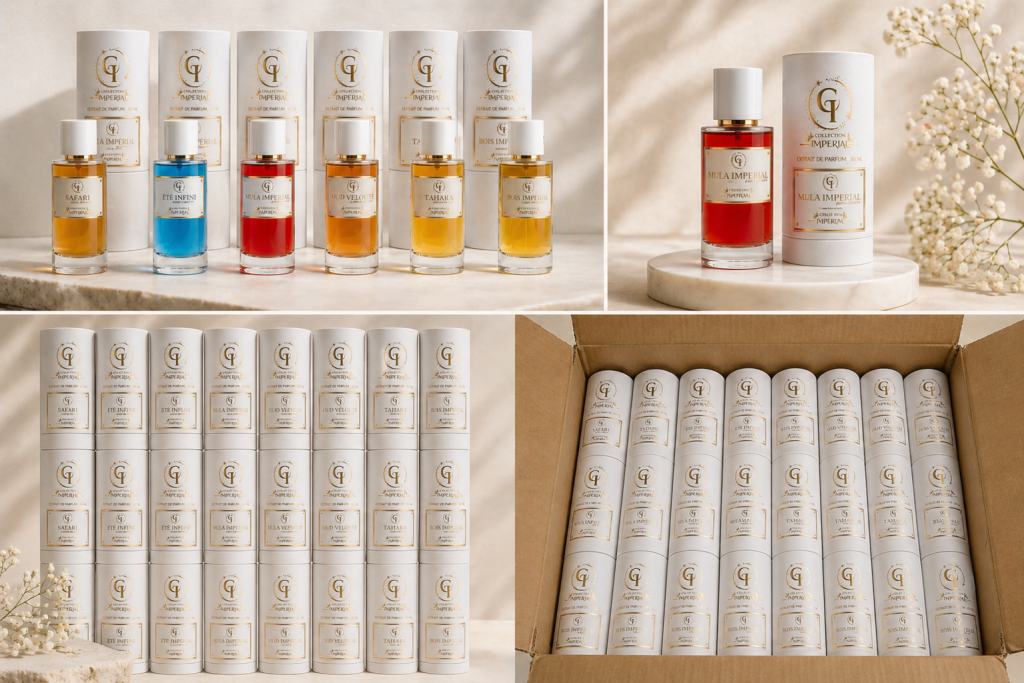
- Crimp atomizer pump — €0.18-€0.45/unit. Standard for 50ml flagship — pump permanently crimped to bottle. Most cost-effective.
- Screw-cap atomizer — €0.22-€0.55/unit. Premium luxury where consumer values the unscrewing ritual. Used by niche houses.
- Magnetic atomizer (refillable) — €1.20-€2.85/unit. The newest tier — atomizer pulls off magnetically for refilling. Mugler-style premium positioning.
- Roll-on ball — €0.28-€0.55/unit. For oil-based 50ml or perfume-oil format launches. See our oil bottles guide.
How to Order 50ml Bottles: 8-Step Process
- Specify dimensions (height × base × neck), weight target (±5g), and silhouette family.
- Select glass type (clear/frosted/coated/premium engineered).
- Choose decoration spec (silkscreen, foil-stamp, embossing).
- Request samples (€20-€80) from 2-3 finalists.
- Negotiate 50ml pricing across three volume points (initial / mid / scale).
- Pay deposit (30-50%). Production starts.
- Pre-shipment QC ($150-$400) for international orders.
- Ship via sea freight (volume) or air freight (urgent under 1,000 units).
6 Common Mistakes With 50ml Sourcing
- Mistake 1 — Wrong weight for retail tier. 60g bottle at $95 retail = quality complaints. 130g bottle at $25 retail = bankruptcy.
- Mistake 2 — Skipping closure compatibility check. Custom neck dimensions = €1,500-€3,000 in extra cap tooling.
- Mistake 3 — Over-decorating. 6 decoration techniques on one bottle reads as trying-too-hard. 1-2 techniques = considered.
- Mistake 4 — Ignoring shipping volumetric weight. Tall thin 50ml bottles cost more per unit to ship than compact squarish 50ml bottles.
- Mistake 5 — Single supplier dependency. Backup supplier = insurance against your primary’s price hike or quality drop.
- Mistake 6 — Pack 100 mindset stuck for 18 months. Reorder Pack 250 at 65% sell-through, not 95%.
Frequently Asked Questions
Why is 50ml the most popular perfume size in 2026?
50ml hits the retail price elasticity sweet spot ($45-$120), is travel-friendly without being inconvenient, and aligns with TikTok-driven fragrance discovery culture where $50-$80 is the “try a new brand” budget threshold.
What is the typical MOQ for custom 50ml bottles?
Stock 50ml bottles: from Pack 100 at warehouse, Pack 1,000 at factory direct. Custom 50ml bottles (your specific design): from Pack 5,000 with single-cavity mold investment €2,500-€6,500.
How heavy should a 50ml bottle be?
Mid-market: 70-90g empty. Premium: 90-130g empty. Luxury: 130g+ empty. The weight is the consumer’s first sales argument — see our glass weight psychology guide.
Can I launch with 50ml only or do I need multiple sizes?
50ml-only launches work for first 6-12 months while validating demand. Once validated, add 30ml entry-tier and/or 100ml premium tier as your second SKU expansion.
Is 50ml allowed on airplanes as carry-on?
Yes — 50ml is well under the 100ml liquid limit for airline carry-on globally. This is a key reason 50ml outperforms 100ml in 2026.
What’s the shipping difference between 50ml and 100ml?
Filled 50ml bottle ships at ~120-160g total weight, filled 100ml at ~220-300g. International parcel rates often have 250g and 500g brackets, so 50ml frequently saves a full pricing tier on per-unit shipping cost.
The 50ml Cap and Atomizer Engineering
Beyond the bottle itself, three closure components determine the consumer experience:
- Atomizer pump — quality varies dramatically. Cheap pumps deliver 0.08-0.10ml per spray (consumer reads as “weak”). Premium pumps deliver 0.10-0.15ml with consistent spray pattern. Cost difference: €0.18 vs €0.55 per unit.
- Cap material — solid metal caps add 12-25g of weight, signaling quality. Plastic-with-metalization caps are detected immediately by consumers as cheap. €0.25 vs €1.20 per unit cost difference.
- Inner stem and dip tube — proper dip tube length ensures product depletion to 95%+. Short dip tubes leave 5-15% of fragrance unusable in the bottle, generating customer complaints near end-of-life.
Reorder Strategy at 50ml: Building Margin Compounding
The most successful 50ml brands follow a disciplined reorder progression. Track sell-through rate weekly. When you hit 65-70% sold (not 95%), order the next tier. The capital efficiency:
- Pack 100 → Pack 250 at 65% sell-through (65 sold, 35 in stock). Pack 250 arrives in 5-7 weeks. By the time it arrives, you’re at ~85% Pack 100 sell-through with 4-week supply runway.
- Pack 250 → Pack 500 at 65% sell-through. Same timing logic. By Pack 500, your unit cost is €7.99 (down from €11.99 — 33% reduction).
- Pack 500 → Pack 1,000 at 65% sell-through. Unit cost drops to €5.99. Total margin compounding from Pack 100 to Pack 1,000: 50% reduction in unit cost.
Comparing 50ml to Other Sizes Across Five Decision Variables
| Variable | 30ml | 50ml | 100ml |
|---|---|---|---|
| Retail price ceiling | $45 max | $120 max | $200+ supported |
| Buyer commitment threshold | Easiest ($25-$45) | Comfortable ($45-$95) | Higher friction ($90+) |
| Travel friendliness | Excellent (purse-size) | Excellent (carry-on) | Acceptable (heavier) |
| Wholesale unit cost (Pack 500) | $5.50-$8.50 | $7-$11 | $11-$16 |
| E-commerce shipping cost | Lowest tier | Mid tier | Highest tier (volumetric weight) |
Five Brand Examples That Built Around 50ml as Flagship
Examining brands that lead with 50ml:
- Le Labo Santal 33 — 50ml at $198 retail. The brand’s hero SKU. Customers buy 50ml first, sometimes upgrade to 100ml later.
- Maison Francis Kurkdjian Baccarat Rouge 540 — 70ml at $325 (slightly above 50ml standard). The format works because the brand positions at $300+ luxury where 50ml feels too small.
- Byredo Gypsy Water — 50ml at $190 retail flagship size. 100ml available at $260 for committed fans.
- Glossier You — 50ml at $60 retail. The format anchors the entry-level price tier perfectly.
- D.S. & Durga — 50ml at $185 retail. Niche luxury positioning supports the price point.
The pattern: 50ml is the format that survives across price tiers from $60 to $200+, making it the safest flagship choice for emerging brands testing positioning.
50ml Sample Validation Specifics
The 50ml format is the highest-volume fragrance size — sampling discipline matters more here than for niche formats:
- Volumetric fill verification — fill to exactly 50ml using volumetric pipette. Variance under 49.5ml or over 50.5ml causes consumer perception issues.
- Atomizer spray pattern photography — spray 10 times against black surface, photograph. Inconsistent patterns indicate cheap pumps that generate complaints.
- Cap torque consistency — open and close 20 times. Verify cap removal force stays consistent (±0.3 Nm).
- Dip tube length verification — verify dip tube reaches 95%+ of interior. Short dip tubes leave 5-15% of fragrance unusable.
QC Strategy for 50ml High-Volume Production
50ml is the highest-volume format in fine fragrance — QC discipline matters more here:
- Pre-production fill calibration — supplier fills 100 sample bottles with water, weighs each. Statistical distribution should show ±0.3ml variance. Higher = production line needs calibration.
- Mid-production photo verification — supplier sends 5 production bottles photographed against grid backdrop. Verify dimensional consistency to ±2mm.
- Atomizer-focused pre-shipment QC — for 50ml, focus inspection on atomizer function (most common failure point) rather than glass quality.
- Receipt inspection priorities — count units, weigh 1 in 100, test atomizer on 5-10 units. Document irregularities within 7 days.
Where to Go Next
- Format comparison → 100ml luxury anchor, 30ml entry-tier
- Pillar guide → Perfume Bottles Wholesale Pillar
- Silhouettes → Square bottles, Luxury bottles
- Glass psychology → Glass weight guide
- Geographic sourcing → USA, China
- Private label launch → Private Label Pillar
👉 Get a 50ml quote on WhatsApp

